Owning the Work-Order Pipeline at Skeens Warehouse Services
Aquiva built Skeens Warehouse Services a native, bi-directional Salesforce integration that made Service Cloud the system of record and synced it both ways with the ServiceChannel and FM Pilot platforms its clients dispatch work from. It retired roughly $40,000 a year in middleware fees, shipped fixed-price in six weeks, and now runs in production, moving work orders in near real-time.
Context
Skeens Warehouse Services (SWS) is a full-service facility services provider. Global logistics, retail, and waste-management brands rely on SWS to keep their facilities running. The work orders that drive the business don't always start in SWS systems. Sometimes they start in the clients' systems: ServiceChannel for one major client, FM Pilot for another. SWS is a registered service vendor in each, and every job, status update, photo, and invoice has to flow through those platforms.
When SWS adopted Salesforce Service Cloud, they faced a decision: pipe the client portals into Salesforce through rented middleware, or build the integration once and own it.
Challenge
The previous setup routed everything through a middleware work-order platform: $9,400 to set up, roughly $22,000 a year to keep, $1,500 a month in platform fees, and $200 for every licensed vendor. Worse than the cost was the ownership problem. Every workflow change meant a vendor request. Every new client system meant a new integration bill.
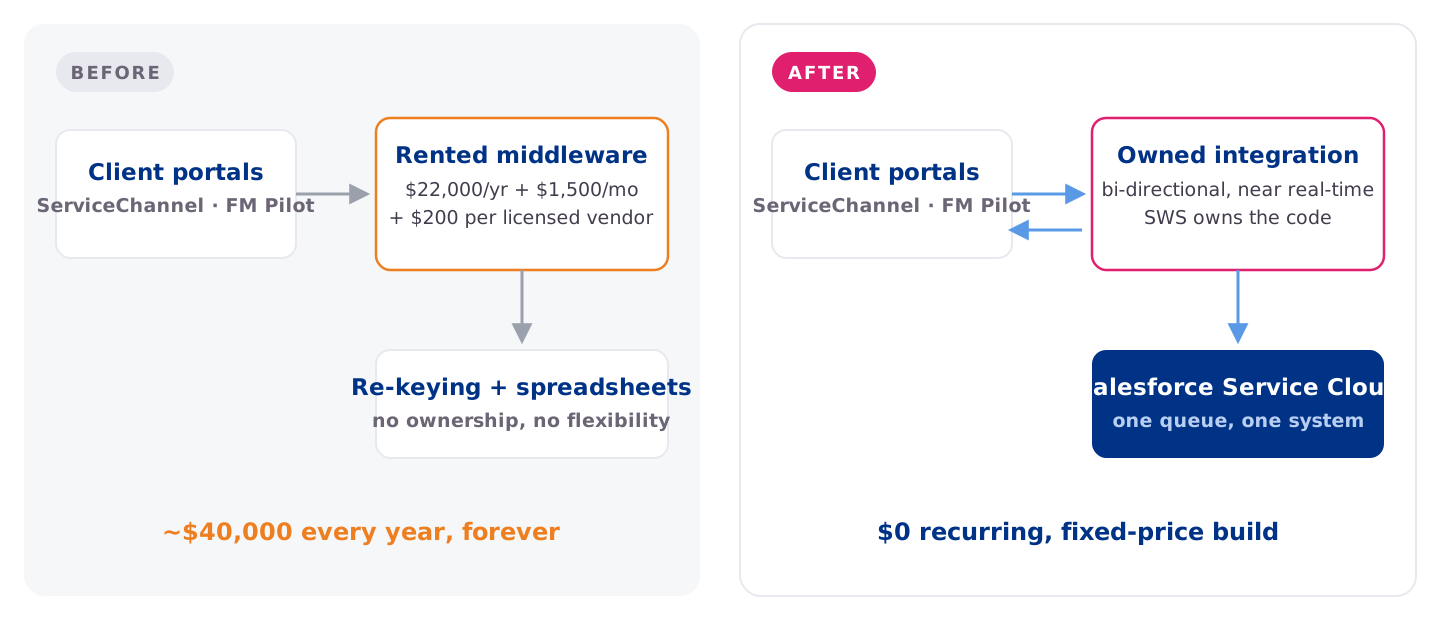
The alternative vendors offered weren't better. Every field-service platform with a built-in ServiceChannel integration requires running the whole operation on that platform. SWS wanted Salesforce as the system of record and needed the bridge, and nobody sells the bridge off the shelf.
Approach
Aquiva built SWS a native, bi-directional integration between Salesforce Service Cloud and both client platforms. Fixed price, six weeks from discovery to production.
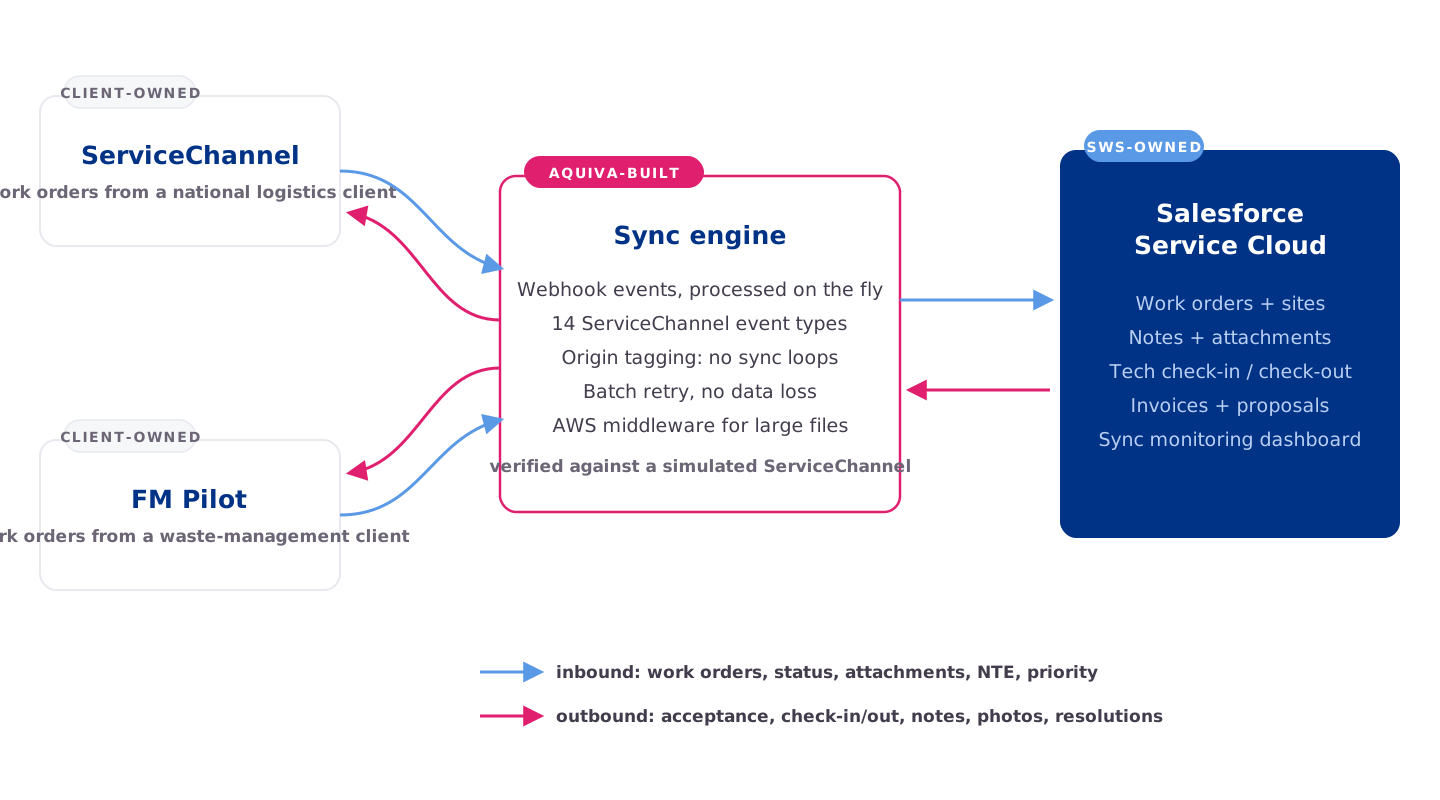
Inbound work orders. ServiceChannel delivers events by webhook and the integration processes them on the fly: work orders appear in Salesforce in near real-time, carrying location, not-to-exceed amounts, priority, descriptions, attachments, and caller information. Fourteen event types are handled, from status changes to invoice approval to NTE updates.
Everything flows back. Acceptance, status changes, technician check-in and check-out, notes, photos, and resolutions sync to the client's system automatically. Origin tagging keeps updates from bouncing between systems, and batch retry recovers failed syncs without data loss.
Built for production. Lightweight AWS middleware moves attachments that exceed platform limits. A simulated ServiceChannel environment let us verify all fourteen event types before anything touched production, and a monitoring dashboard shows the SWS team every sync, success or failure.
Outcome
The integration is live in production, processing daily work-order volume across two client platforms. Roughly $40,000 a year in middleware platform and per-vendor licensing costs is gone. Office staff work from Salesforce, not four browser tabs. Technicians check in and out from the field, and the client's system updates itself.
We used to pay just to move work orders between our clients' systems and ours. Now the integration is ours. Work orders show up in Salesforce within moments, and every improvement we make is ours.
Steven Watkins, IT Director, Skeens Warehouse Services
The foundation carried their next projects. SWS has since kicked off proposal and invoice automation on the same integration and is building agentic AI operational systems to further support scalability.
See also: Solution Briefs
Have a project like this one?
Fixed-price builds, running in production. Tell us what your systems need to talk to.